- Lab Diamonds
Blue Nuance and Phosphorescence in Lab Diamonds
Blue nuance is a tinge of blue color present in HPHT diamonds, resulting from excess boron in the diamond after the growth process.
Diamond Education
Your guide to HPHT diamonds from the experts at Ada.
HPHT diamond, lab grown diamond quality, blue tinge diamond, phosphorescence diamond, gray lab diamond, lab diamond education

What is HPHT?
High pressure, high temperature — HPHT — is one of two methods for growing lab diamonds. It replicates the conditions under which natural diamonds form deep in the earth: extreme pressure and extreme heat, applied to a diamond seed until a new crystal grows around it. The process happens inside a sophisticated press capable of generating pressures over 1.5 million pounds per square inch.
How an HPHT diamond is grown — the quality of the seeds, the composition of the growth cell, and the decisions made by the grower — determines how the finished diamond looks in person. Two diamonds with identical grading reports can look completely different.
This guide covers how HPHT diamonds are grown, the defects that can affect their appearance, and what our team looks for when evaluating them.
How HPHT Diamonds are Grown
The process starts with a diamond seed, placed inside a growth cell along with a carbon source and a metal catalyst, typically iron, nickel, or cobalt. The cell is loaded into a hydraulic press. Temperatures rise to over 1,300 degrees Celsius. Pressure reaches 50,000 to 70,000 atmospheres. Under those conditions, the carbon dissolves into the catalyst and migrates to the seed, growing a new diamond crystal over days or weeks.
The diamond grows in a cubic structure with distinct growth sectors, areas of the crystal that grew in different directions at different times. Those sectors can behave differently under light and can respond differently to the elements present in the growth cell.
When done properly, HPHT produces beautiful, high-quality lab diamonds. As the market for lab diamonds has grown, so has the number of people producing them. Some growers use premium materials and slow, careful growth. Others choose to produce lower-quality goods because it is faster and cheaper for them to do so.
How Ada Evaluates: BGP (Blue, Gray, Phosphorescence)
When our team evaluates HPHT diamonds, we use a framework built around three categories of defect: blue, gray, and phosphorescence. We call it BGP.
None of these appear on a grading report. They can only be assessed in person, under varying light conditions, and with direct phosphorescence testing. This is why we inspect every diamond ourselves before it enters our inventory.
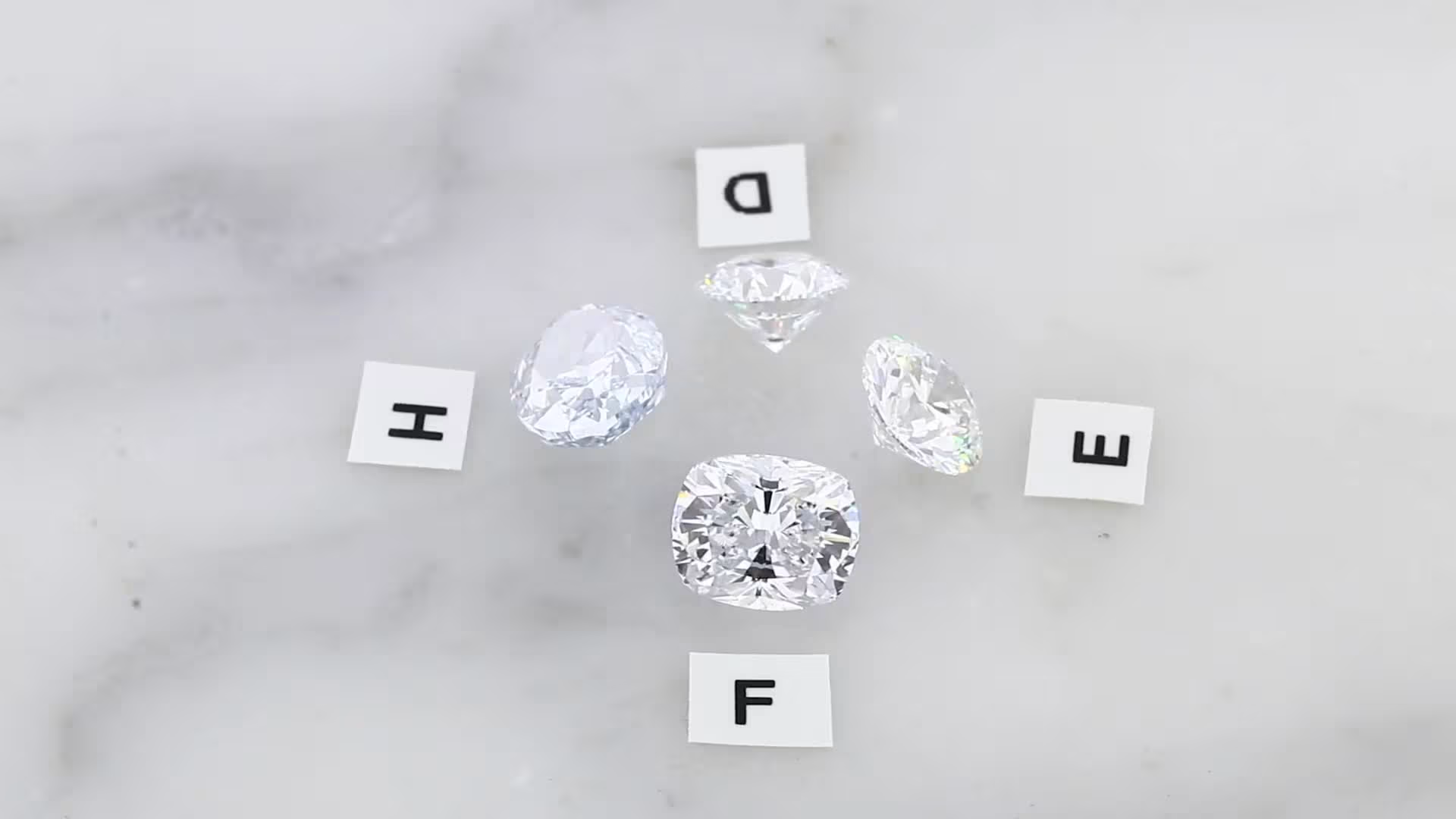
Blue tinge is the most distinctive defect in HPHT diamonds, and one of the most common. It's caused by trace boron added during the growth process to compensate for nitrogen.
Here's why that matters. HPHT diamonds are grown in an environment where nitrogen is a persistent contaminant. For years, this gave HPHT stones a yellowish-orange cast. Growers learned to compensate by introducing boron, which pairs with nitrogen atoms in the crystal lattice and neutralizes their optical effect. Get the balance right, and you have a colorless stone. Add too much boron, and the diamond takes on a blue tinge instead.
75% of HPHT diamonds submitted to GIA are classified as Type IIb, meaning they contain measurable levels of boron. That doesn't mean all of them have visible blue tinge. But many do, and is impossible to evaluate from a grading report alone.
Blue naturally occurring diamonds do exist, but they're exceptionally rare, making up less than 0.1% of the gemstone market and carrying significant price premiums. A consumer who picks up a blue-tinged HPHT stone at an ordinary price point may reasonably wonder whether it's actually a diamond. That's a problem worth avoiding.
Boron is also difficult to control. Within a single grower's output, some stones come out blue and some don't. Even within a single diamond, some growth sectors can carry boron while others don't. It's possible to have a stone with both a blue sector and a nitrogen-influenced sector in the same crystal, producing a greenish tinge where the two interact. That same stone can still receive an I color grade on a grading report.
We cover blue nuance in depth on its own page, including phosphorescence testing and what to watch for when shopping.
READ THE FULL GUIDE TO BLUE NUANCE
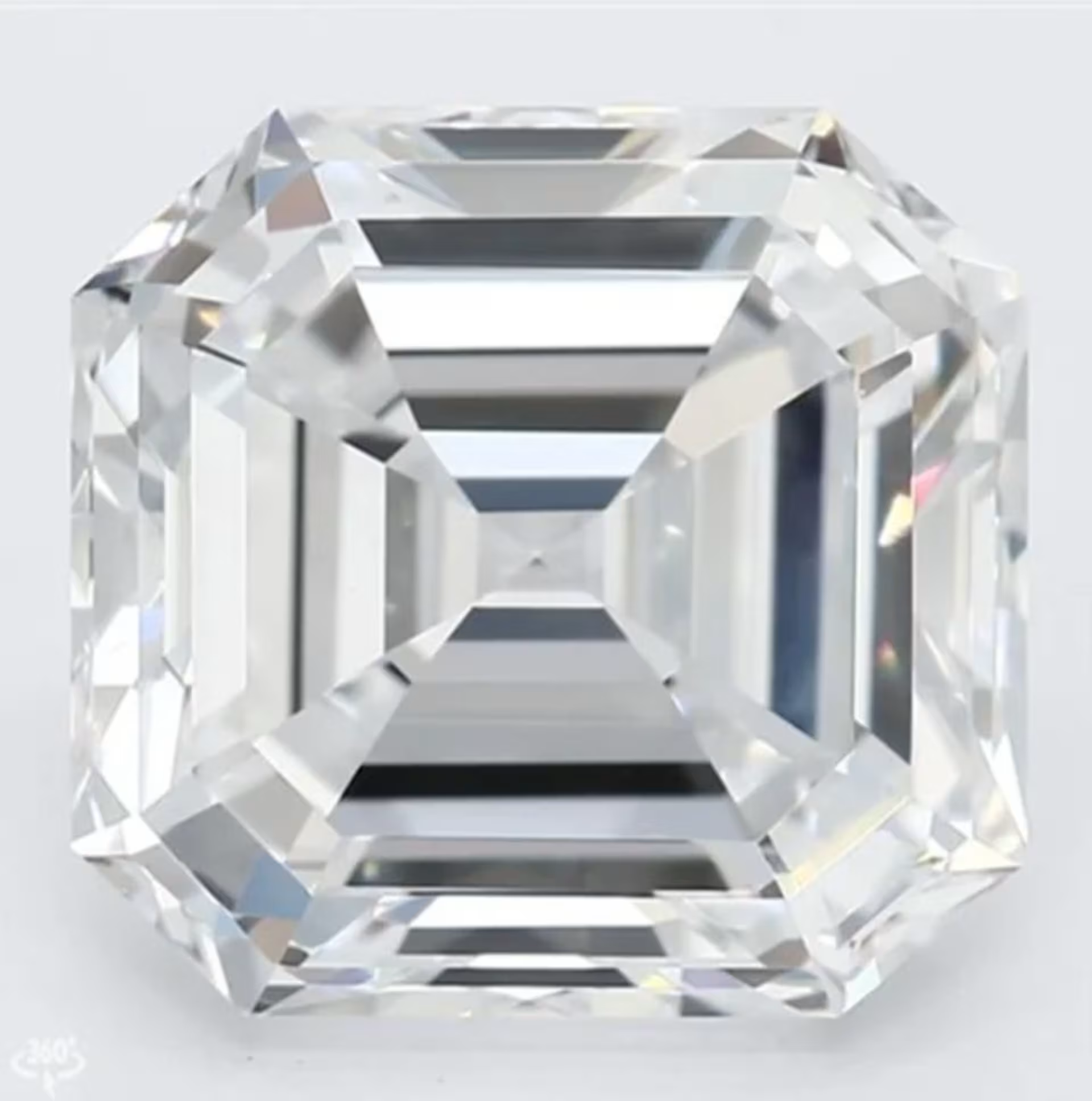
Gray in HPHT diamonds has multiple causes, and not all of them are fully understood.
In some cases it's simply that a blue tinge reads as gray under certain lighting conditions. In others, the stone may have been irradiated, or may contain trace metals from the growth cell, including aluminum, titanium, or nickel. Some HPHT diamonds have visible metallic inclusions from the catalytic material used in the press.
The exact formulas growers use to control nitrogen are closely held trade secrets. Those formulas determine whether an HPHT diamond comes out bright white or grayish blue. There's no way to know from the grading report alone.
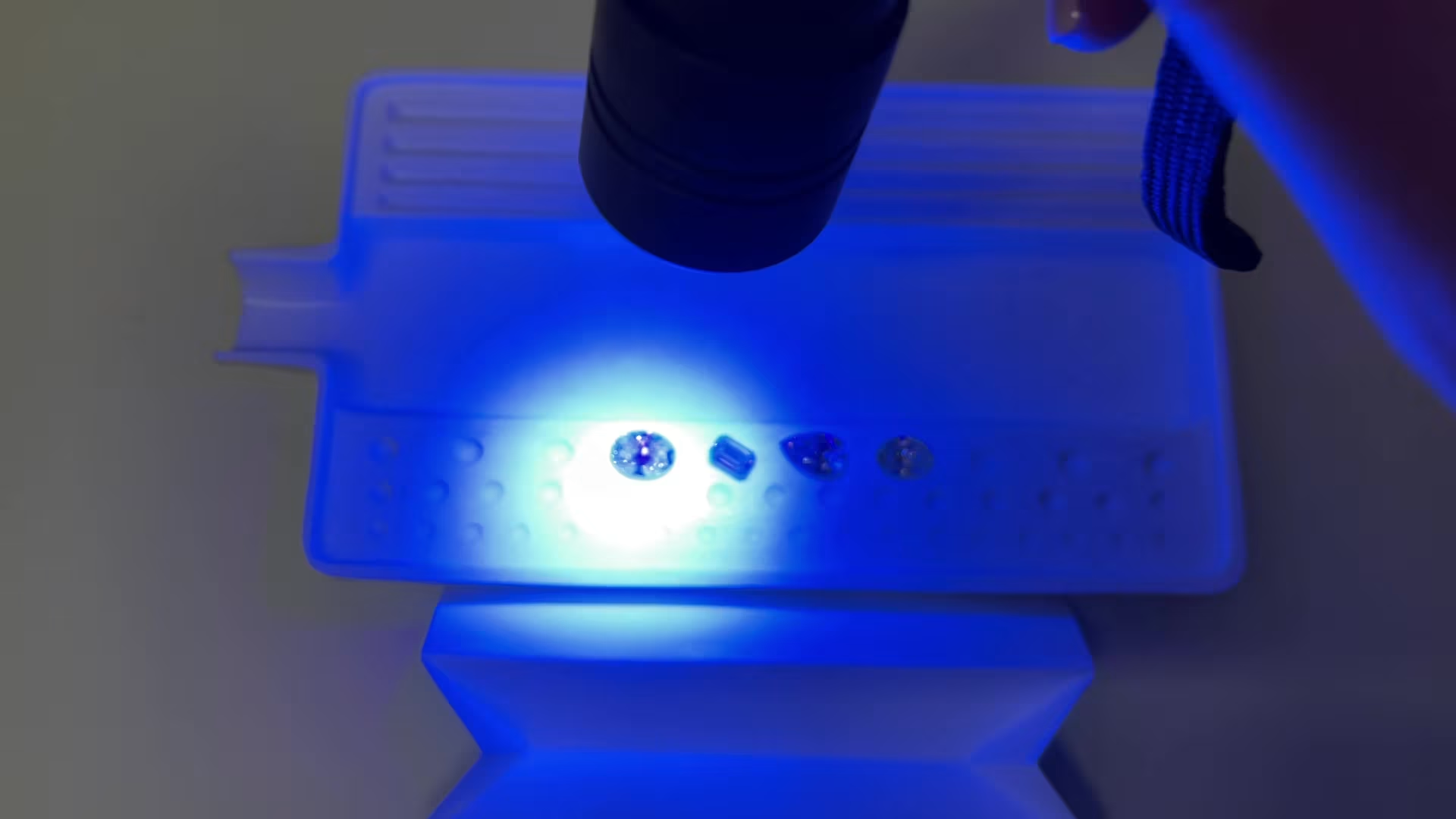
Phosphorescence is the most surprising defect in HPHT diamonds, and arguably the most important one to know about before you buy.
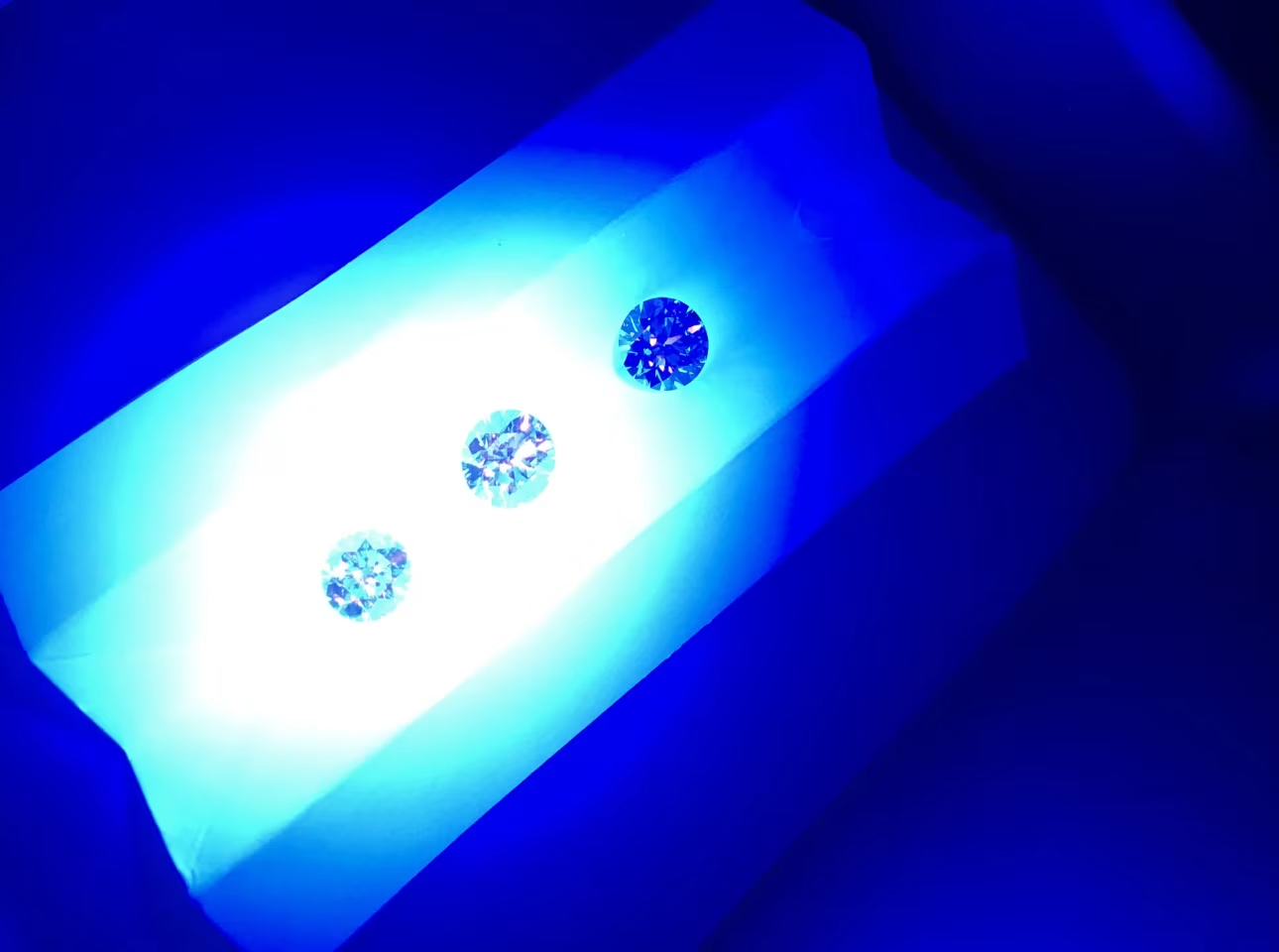
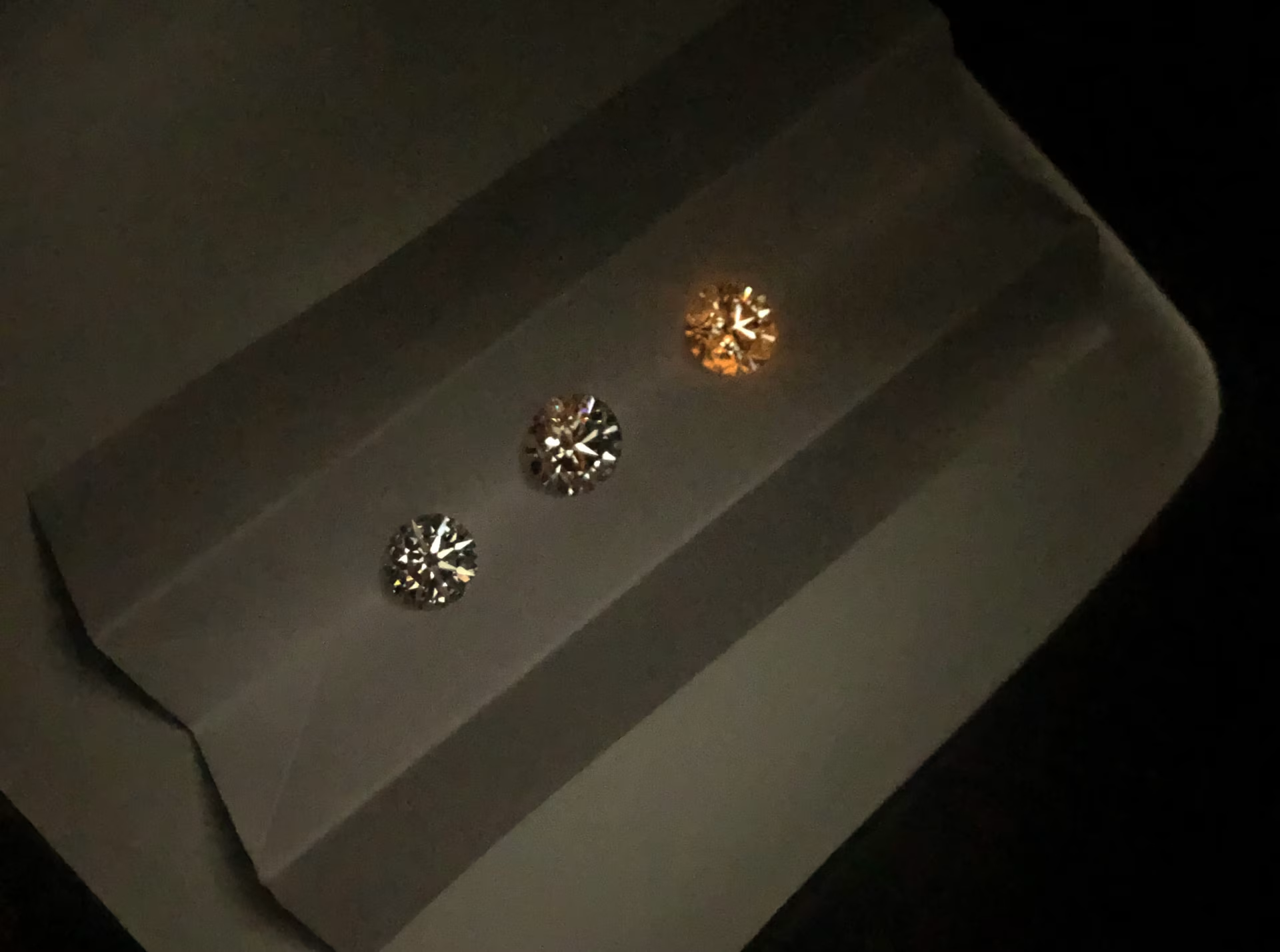
Phosphorescence is a glow that appears in some HPHT diamonds after exposure to UV light, including ordinary sunlight and indoor lighting. Once activated, the glow can persist for minutes or hours. It's connected to boron at an atomic level, not an optical one, which means it can appear in HPHT diamonds that show no visible blue tinge. It is not disclosed on a grading report. It can only be tested for in person.
To demonstrate: four HPHT diamonds placed under a simple handheld longwave UV light available for a few dollars online. When the main light is turned off, two of the four glow noticeably. The other two are inert. There's no way to know which is which from a grading report.
The same four diamonds were left in an office for an hour. When the room light was turned off, they glowed again. Not from residual UV exposure, but from the ambient office lighting itself. No special equipment. Just darkness.
This matters for a few reasons. Most consumers believe lab grown diamonds are chemically identical to natural diamonds in all observable ways. Fewer than 0.1% of natural diamonds phosphoresce under ordinary indoor lighting. A stone that glows in a dark movie theater, without warning, can seriously erode confidence in the purchase. Medium to strong phosphorescence can also make a diamond appear hazy or cloudy in low-light environments.
The Ada Diamonds Difference

The 5th C: Confidence
At Ada Diamonds, we specialize in premium lab grown diamonds. Unlike most retailers who offer diamonds for sale that they do not actually own, every diamond you see here has been evaluated in person and hand-selected by our experts.
A grading report tells you the 4 C's. It does not tell you whether your HPHT diamond has blue tinge, gray cast, or phosphorescence. Two stones with identical grades can look completely different in person, and one may behave in ways you didn't expect.
Online video has the same limitations here as with CVD. Camera settings and lighting adjustments can mask blue tinge entirely. Phosphorescence is impossible to detect on video.
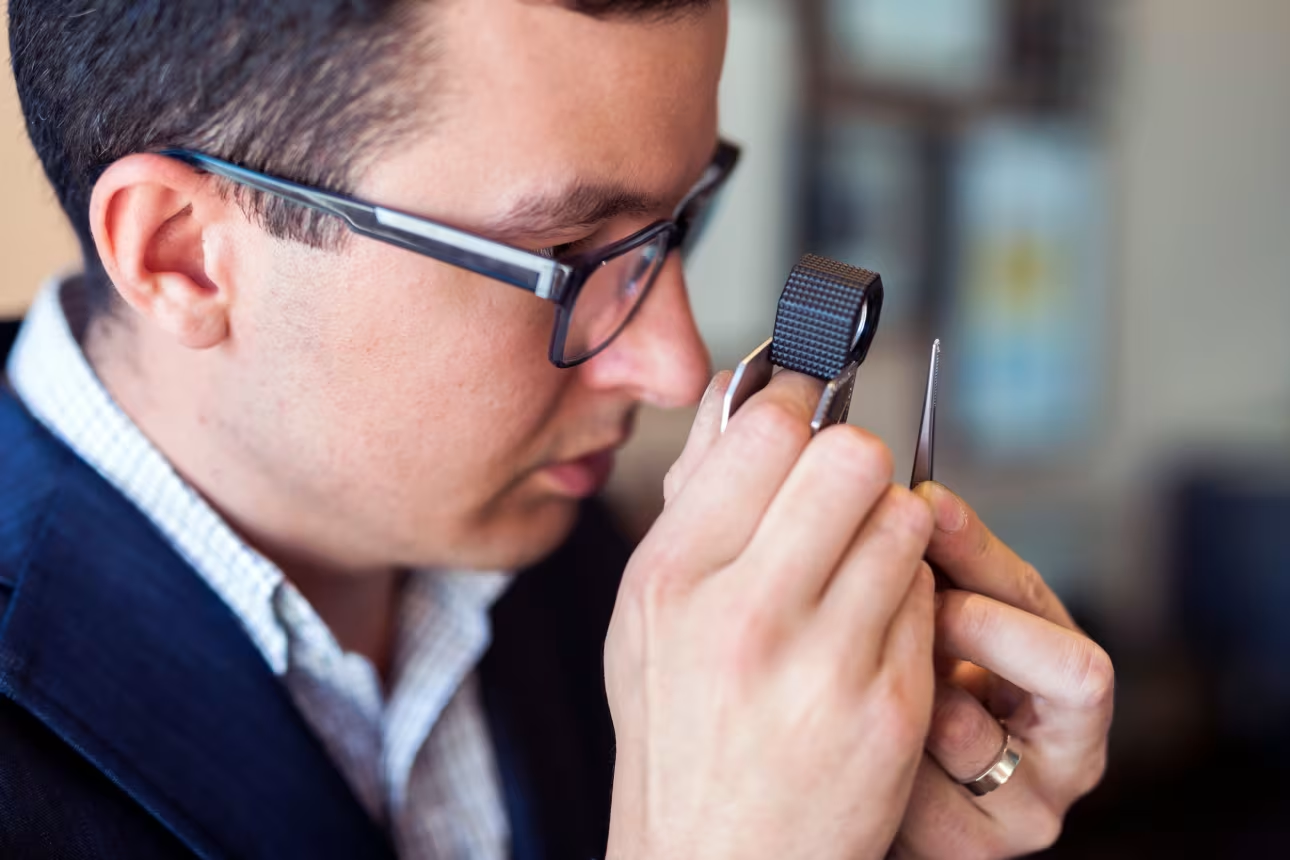
This is why we inspect every diamond before it enters our inventory. Our team evaluates each stone in person, under multiple light conditions, and tests for phosphorescence directly. We look for the things a report won't tell you, and the things a video can hide.
A grading report is a starting point, not the whole story.
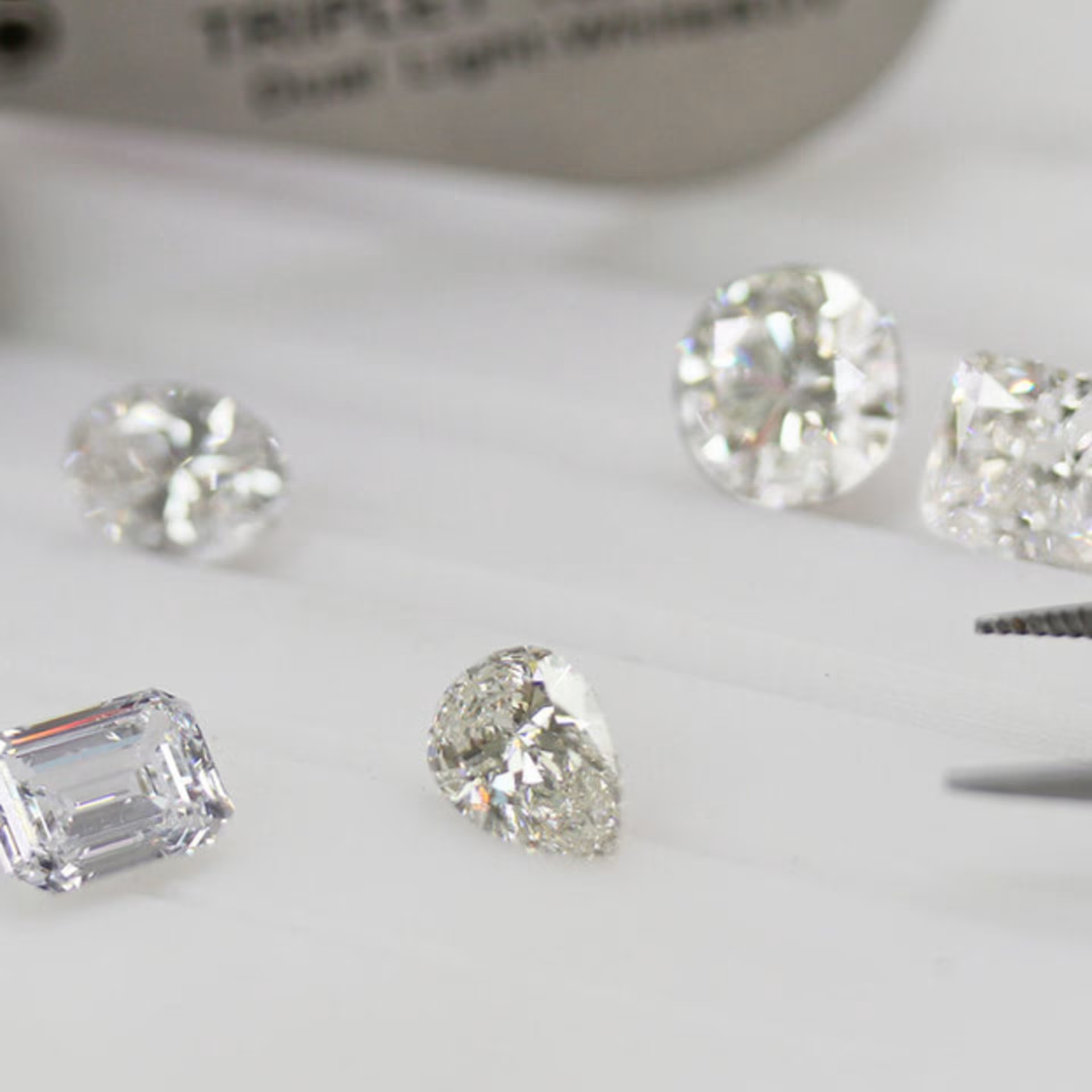
Why Lab Diamond Quality Varies
While diamond growth technology has improved, many growers who are capable of producing nice diamonds actively choose to grow ugly ones because it is so much cheaper and faster to do so.
Higher-quality stones take more time and precision to produce, trade at higher prices, and can rival some of the most exceptional natural diamonds.
At Ada, we are the leading experts in sourcing quality lab grown diamonds. Every diamond is inspected in-house before it's ever offered, with only the ones that meet our strict standards making it through.
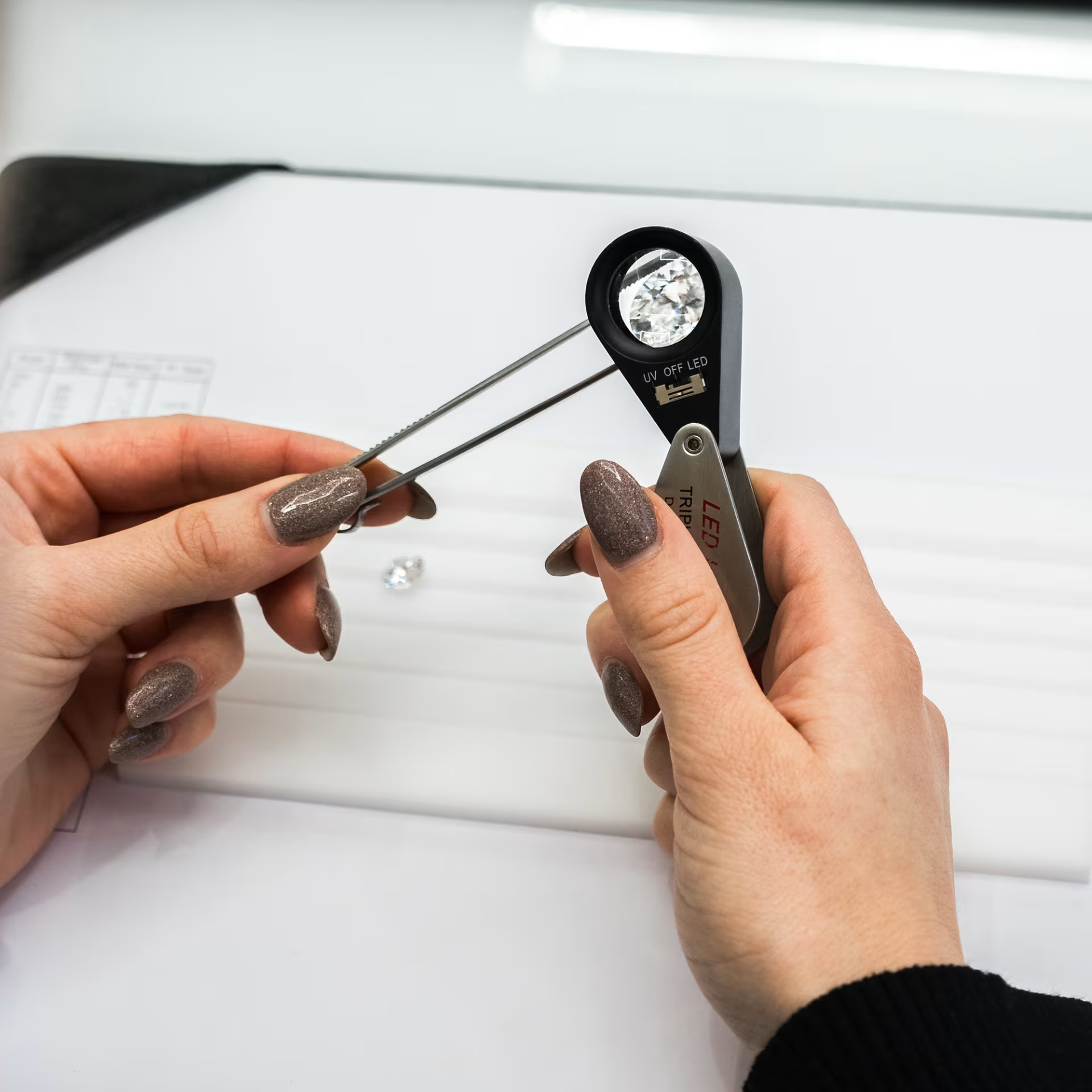
We've Done the Hard Part
Our Diamond QC team is built on real, hands-on experience. With extensive time spent evaluating lab diamonds across the full spectrum of quality.
They identify subtle issues others miss, from unnatural color and poor crystal material to undesirable inclusions and poor make, ensuring every diamond we offer meets our standards.
Because every stone is in house, we capture our own photos and videos using consistent lighting. What you see is a true-to-life representation, so you can compare with clarity.
Blue nuance is a tinge of blue color present in HPHT diamonds, resulting from excess boron in the diamond after the growth process.
Diamond Education
A deep dive into CVD diamond growth, the defects that can affect appearance, and what to look for when evaluating a lab grown diamond.
Lab Diamonds

Everything you need to know before buying a lab diamond online, and how to make sure you're getting what you pay for.
Your guide to HPHT diamonds from the experts at Ada.
HPHT diamond, lab grown diamond quality, blue tinge diamond, phosphorescence diamond, gray lab diamond, lab diamond education
What is HPHT?
High pressure, high temperature — HPHT — is one of two methods for growing lab diamonds. It replicates the conditions under which natural diamonds form deep in the earth: extreme pressure and extreme heat, applied to a diamond seed until a new crystal grows around it. The process happens inside a sophisticated press capable of generating pressures over 1.5 million pounds per square inch.
How an HPHT diamond is grown — the quality of the seeds, the composition of the growth cell, and the decisions made by the grower — determines how the finished diamond looks in person. Two diamonds with identical grading reports can look completely different.
This guide covers how HPHT diamonds are grown, the defects that can affect their appearance, and what our team looks for when evaluating them.
How HPHT Diamonds are Grown
The process starts with a diamond seed, placed inside a growth cell along with a carbon source and a metal catalyst, typically iron, nickel, or cobalt. The cell is loaded into a hydraulic press. Temperatures rise to over 1,300 degrees Celsius. Pressure reaches 50,000 to 70,000 atmospheres. Under those conditions, the carbon dissolves into the catalyst and migrates to the seed, growing a new diamond crystal over days or weeks.
The diamond grows in a cubic structure with distinct growth sectors, areas of the crystal that grew in different directions at different times. Those sectors can behave differently under light and can respond differently to the elements present in the growth cell.
When done properly, HPHT produces beautiful, high-quality lab diamonds. As the market for lab diamonds has grown, so has the number of people producing them. Some growers use premium materials and slow, careful growth. Others choose to produce lower-quality goods because it is faster and cheaper for them to do so.
How Ada Evaluates: BGP (Blue, Gray, Phosphorescence)
When our team evaluates HPHT diamonds, we use a framework built around three categories of defect: blue, gray, and phosphorescence. We call it BGP.
None of these appear on a grading report. They can only be assessed in person, under varying light conditions, and with direct phosphorescence testing. This is why we inspect every diamond ourselves before it enters our inventory.
Blue tinge is the most distinctive defect in HPHT diamonds, and one of the most common. It's caused by trace boron added during the growth process to compensate for nitrogen.
Here's why that matters. HPHT diamonds are grown in an environment where nitrogen is a persistent contaminant. For years, this gave HPHT stones a yellowish-orange cast. Growers learned to compensate by introducing boron, which pairs with nitrogen atoms in the crystal lattice and neutralizes their optical effect. Get the balance right, and you have a colorless stone. Add too much boron, and the diamond takes on a blue tinge instead.
75% of HPHT diamonds submitted to GIA are classified as Type IIb, meaning they contain measurable levels of boron. That doesn't mean all of them have visible blue tinge. But many do, and is impossible to evaluate from a grading report alone.
Blue naturally occurring diamonds do exist, but they're exceptionally rare, making up less than 0.1% of the gemstone market and carrying significant price premiums. A consumer who picks up a blue-tinged HPHT stone at an ordinary price point may reasonably wonder whether it's actually a diamond. That's a problem worth avoiding.
Boron is also difficult to control. Within a single grower's output, some stones come out blue and some don't. Even within a single diamond, some growth sectors can carry boron while others don't. It's possible to have a stone with both a blue sector and a nitrogen-influenced sector in the same crystal, producing a greenish tinge where the two interact. That same stone can still receive an I color grade on a grading report.
We cover blue nuance in depth on its own page, including phosphorescence testing and what to watch for when shopping.
READ THE FULL GUIDE TO BLUE NUANCE
Gray in HPHT diamonds has multiple causes, and not all of them are fully understood.
In some cases it's simply that a blue tinge reads as gray under certain lighting conditions. In others, the stone may have been irradiated, or may contain trace metals from the growth cell, including aluminum, titanium, or nickel. Some HPHT diamonds have visible metallic inclusions from the catalytic material used in the press.
The exact formulas growers use to control nitrogen are closely held trade secrets. Those formulas determine whether an HPHT diamond comes out bright white or grayish blue. There's no way to know from the grading report alone.
Phosphorescence is the most surprising defect in HPHT diamonds, and arguably the most important one to know about before you buy.
Phosphorescence is a glow that appears in some HPHT diamonds after exposure to UV light, including ordinary sunlight and indoor lighting. Once activated, the glow can persist for minutes or hours. It's connected to boron at an atomic level, not an optical one, which means it can appear in HPHT diamonds that show no visible blue tinge. It is not disclosed on a grading report. It can only be tested for in person.
To demonstrate: four HPHT diamonds placed under a simple handheld longwave UV light available for a few dollars online. When the main light is turned off, two of the four glow noticeably. The other two are inert. There's no way to know which is which from a grading report.
The same four diamonds were left in an office for an hour. When the room light was turned off, they glowed again. Not from residual UV exposure, but from the ambient office lighting itself. No special equipment. Just darkness.
This matters for a few reasons. Most consumers believe lab grown diamonds are chemically identical to natural diamonds in all observable ways. Fewer than 0.1% of natural diamonds phosphoresce under ordinary indoor lighting. A stone that glows in a dark movie theater, without warning, can seriously erode confidence in the purchase. Medium to strong phosphorescence can also make a diamond appear hazy or cloudy in low-light environments.
The Ada Diamonds Difference
The 5th C: Confidence
At Ada Diamonds, we specialize in premium lab grown diamonds. Unlike most retailers who offer diamonds for sale that they do not actually own, every diamond you see here has been evaluated in person and hand-selected by our experts.
A grading report tells you the 4 C's. It does not tell you whether your HPHT diamond has blue tinge, gray cast, or phosphorescence. Two stones with identical grades can look completely different in person, and one may behave in ways you didn't expect.
Online video has the same limitations here as with CVD. Camera settings and lighting adjustments can mask blue tinge entirely. Phosphorescence is impossible to detect on video.
This is why we inspect every diamond before it enters our inventory. Our team evaluates each stone in person, under multiple light conditions, and tests for phosphorescence directly. We look for the things a report won't tell you, and the things a video can hide.
A grading report is a starting point, not the whole story.
Why Lab Diamond Quality Varies
While diamond growth technology has improved, many growers who are capable of producing nice diamonds actively choose to grow ugly ones because it is so much cheaper and faster to do so.
Higher-quality stones take more time and precision to produce, trade at higher prices, and can rival some of the most exceptional natural diamonds.
At Ada, we are the leading experts in sourcing quality lab grown diamonds. Every diamond is inspected in-house before it's ever offered, with only the ones that meet our strict standards making it through.
We've Done the Hard Part
Our Diamond QC team is built on real, hands-on experience. With extensive time spent evaluating lab diamonds across the full spectrum of quality.
They identify subtle issues others miss, from unnatural color and poor crystal material to undesirable inclusions and poor make, ensuring every diamond we offer meets our standards.
Because every stone is in house, we capture our own photos and videos using consistent lighting. What you see is a true-to-life representation, so you can compare with clarity.
Blue nuance is a tinge of blue color present in HPHT diamonds, resulting from excess boron in the diamond after the growth process.
Diamond Education
A deep dive into CVD diamond growth, the defects that can affect appearance, and what to look for when evaluating a lab grown diamond.
Lab Diamonds
Everything you need to know before buying a lab diamond online, and how to make sure you're getting what you pay for.